Below:
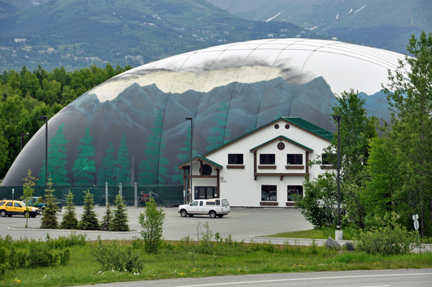
Karen Duquette took a quick photo of H2O Indoor Waterpark at 1520 O'Malley
Road, Anchorage as Lee Duquette drove by it in their RV. They did NOT
stop because it just is not always possible to find a big enough space
to stop when traveling in the RV.
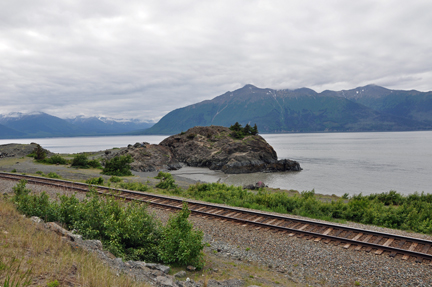
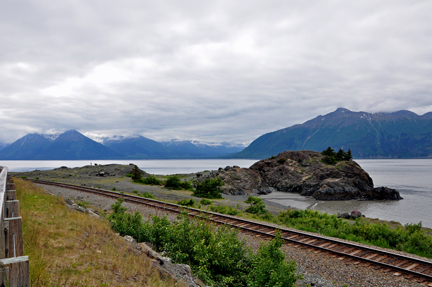
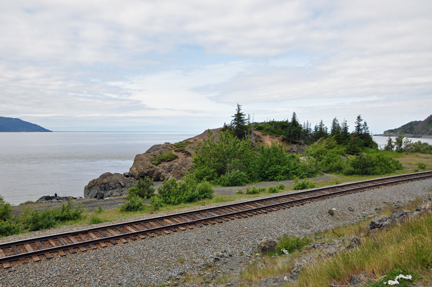
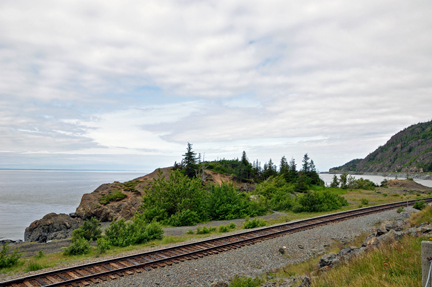
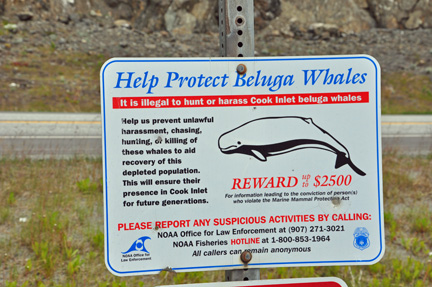
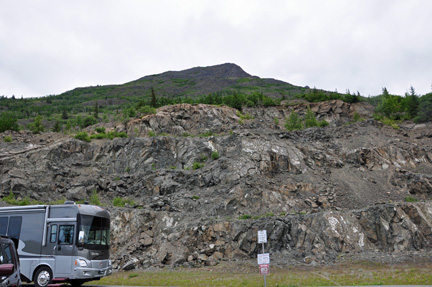
Below: There were actually
mountain goats on the mountain in the photo below -
but only a few white specks could be seen without a telescope or binoculars.
but only a few white specks could be seen without a telescope or binoculars.
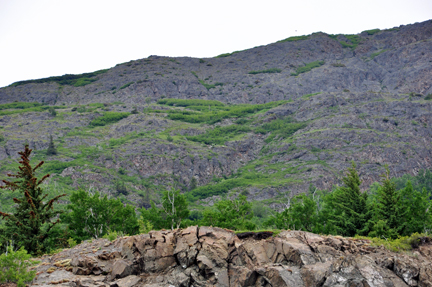
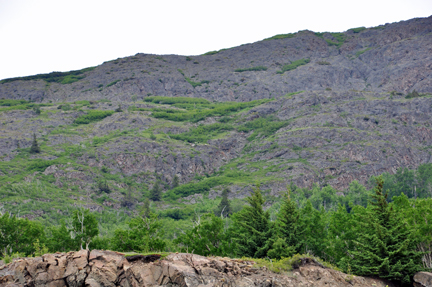
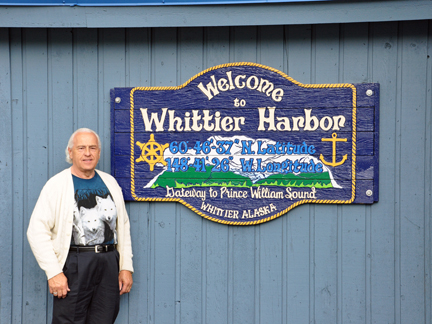
 Whittier
- originally a part of the portage route for the Chugach Indians of
Prince William Sound traveling to fish Turnagain Arm.
Later the Russians and Americans exploring the region also used this passage.
It was used by prospecting miners during the gold rush as it was the quickest
passage from the Sound to the Cook Inlet and Interior regions. The city
itself is a historical area, established by the U.S. Army during World War
II. The Federal railroad to Portage was completed in 1943 and became the
primary debarkation point for cargo, troops, and dependents of the Alaska
Command.
Whittier
- originally a part of the portage route for the Chugach Indians of
Prince William Sound traveling to fish Turnagain Arm.
Later the Russians and Americans exploring the region also used this passage.
It was used by prospecting miners during the gold rush as it was the quickest
passage from the Sound to the Cook Inlet and Interior regions. The city
itself is a historical area, established by the U.S. Army during World War
II. The Federal railroad to Portage was completed in 1943 and became the
primary debarkation point for cargo, troops, and dependents of the Alaska
Command.
In 1948 the military began construction of the first of two buildings for their military personnel as the Port of Whittier was then recognized as an ice-free, deepwater port strategically located to Anchorage and Interior Alaska. This remained active until 1960 at which time the total population was 1,200.
The City of Whittier was incorporated in 1969. Today, less than 300 people reside in the town supporting the Alaska State Ferry, the Alaska Railroad, freight barge, commercial fishing, the Small Boat Harbor, recreation and tourism with an annual visiting population of over 700,000.
Whittier
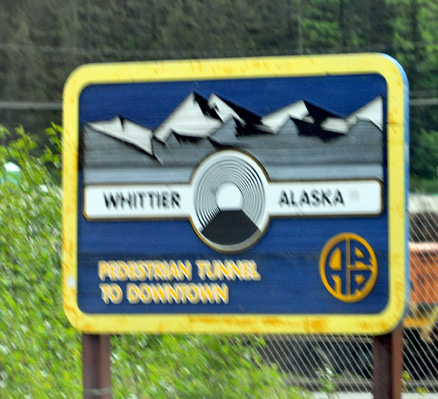
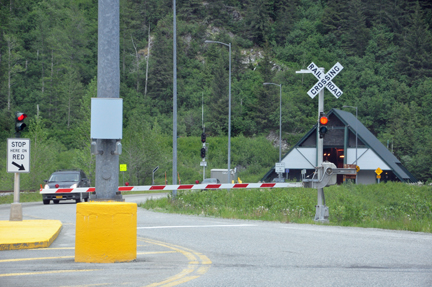
Tunnel - This tunnel is the longest combined
vehicle-railroad tunnel in North America at 2.5 miles. It
is the first U.S. tunnel with jet turbine and portal fan ventilation, the
first computerized regulation of both rail and highway traffic and the first
tunnel designed for -40° F. and 150 mph winds. After a rock slide closed
the Whittier tunnel to road traffic on April 13, 2009, highway crews cleared
the rock from the road and also followed through with some additional blasting
to eliminate some additional areas of concern from the roadway. During the
closure, traffic in and out of Whittier was limited to trains operated by
the Alaska Railroad. Once a year it is closed for "the
Walk to Whittier." This year, 2009, it was Sunday, June
14 - just BEFORE the two RV Gypsies arrived.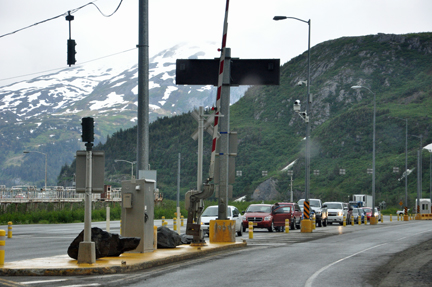
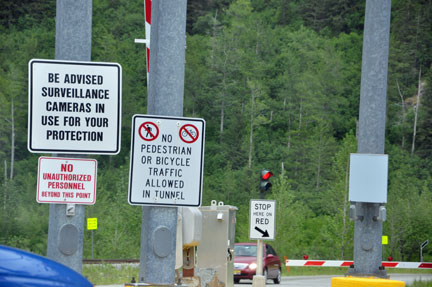
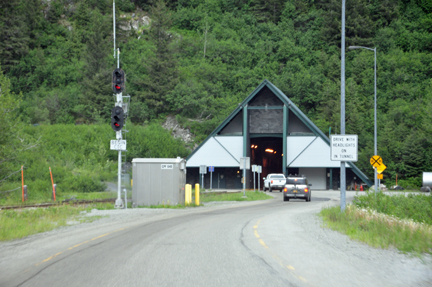
On this date, vehicles were lined up in 10 rows, sorted by cars, RV's, trucks and busses. Each row had a traffic light, plus there was another traffic light that spaced the cars before they entered the tunnel. Vehicles were let in on the half hour, and let out of Whittier on the hour. If you snooze you lose! Trains always get priority.
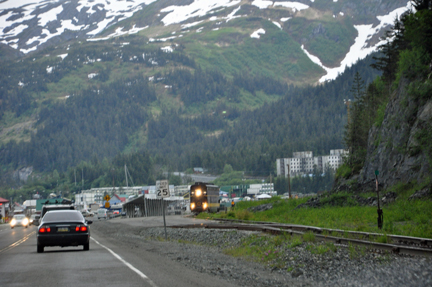
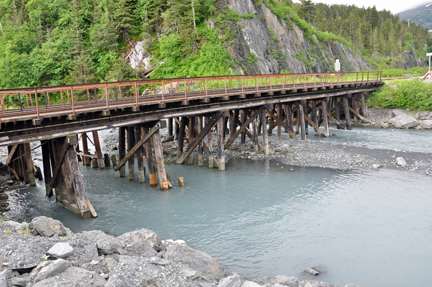
Below: A
train ready to cross the bridge, then it will enter the same tunnel the
cars just came through.
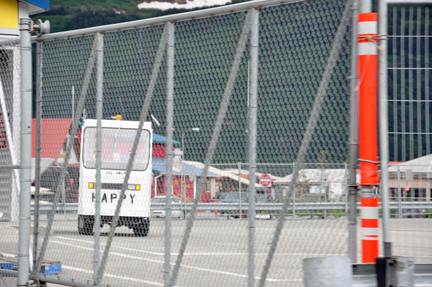
Below - A "Happy" vehicle - whatever that is
An interesting
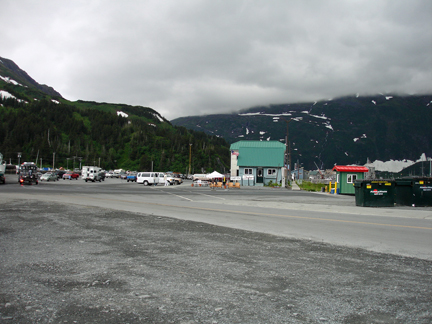
fact: Portal buildings are designed to withstand avalanches.
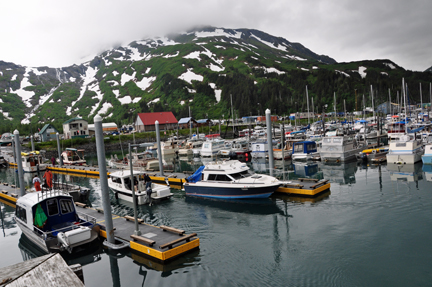
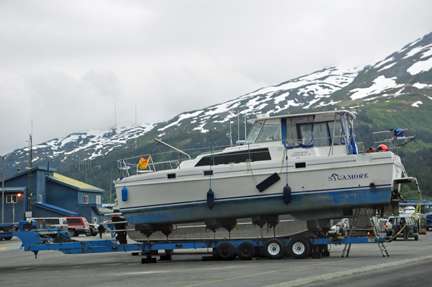
Below: Boats parked in
the middle of the main road.