Lee and
Karen Duquette,
The Two RV Gypsies: Full-Time RVers
The Two RV Gypsies: Full-Time RVers
in Las
Cruces

April 14 - 15, 2009
Lee and
Karen Duquette, The Two RV Gypsies: Full-Time RVers |
|
in Las
Cruces |
|
April 14 - 15, 2009 |
|
|
|
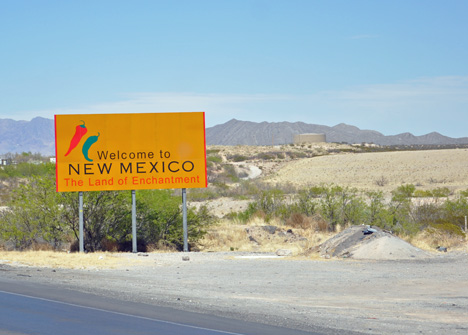
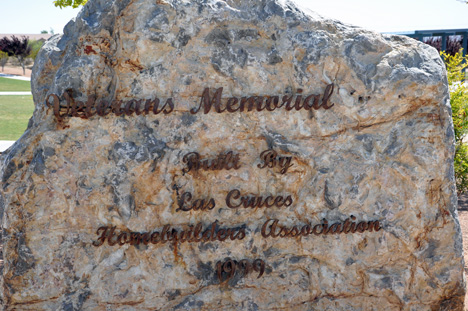
Below you will find photos of Sunny Acres RV Park, beautiful scenery of the Organ Mountains, New Mexico's state flag, state bird, state flower; plus the world's largest road runner; Veteran's Memorial, three crosses, houses, plants, and the historic Village of Mesilla. At the bottom of this page is a sub-menu to see photos of White Sands and the Space Mural - not to be missed. |
|
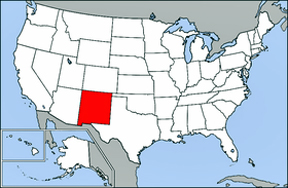
Origin of state's name: Named by the Spanish for lands north of the Rio Grande RiverCapital City: Santa Fe
|
 |
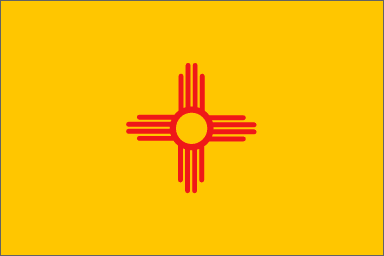
New Mexico State Flag
|
The yellow field and red symbol colors are the colors of Spain. First brought to New Mexico by Spanish explorers in 1540. On New Mexico's flag we see a red sun with rays stretching out from it. There are four groups of rays with four rays in each group. This is an ancient sun symbol of a Native American people called the Zia. The Zia believed that the giver of all good gave them gifts in groups of four. These gifts are: * The four directions - north, east, south and west. |
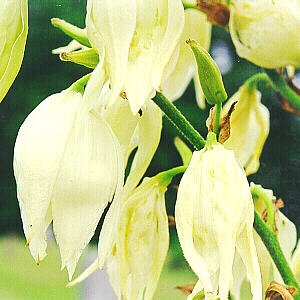
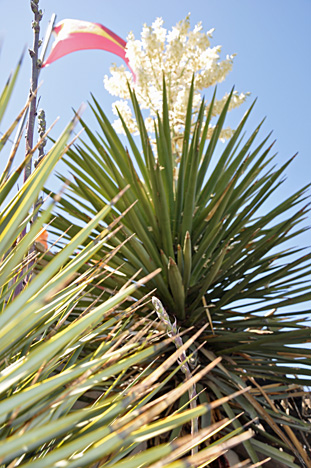
New Mexico State Flower: The yucca was adopted as the State Flower on March 14, 1927. The yucca is a member of the lily family and a symbol of sturdiness as well as beauty. In the early summer, pale ivory flowers bloom at the tips of its long, fibrous stalks. At the base of the plant are broad, sharp edged leaves that look like stilettos. The yucca sometimes grows to the height of a small tree. |
 |
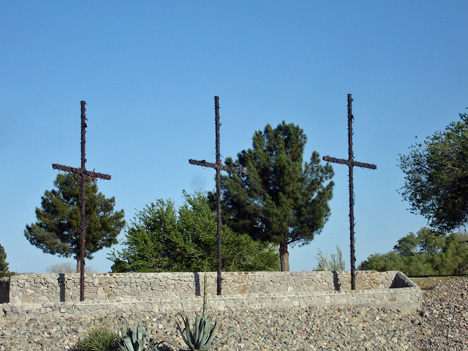 |
The origin of the city's name is unknown. In Spanish "Las Cruces" means "the crosses". Crosses have a symbolic meaning for many people in the area. The three crosses has been a symbol of the Las Cruces area since before Mesilla's founding in 1848, and was recently challenged in court. |
 |
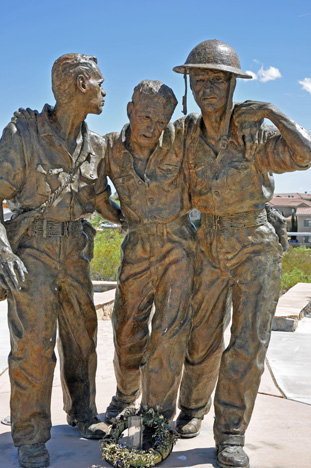
Bataan Memorial Monument |
 |
|
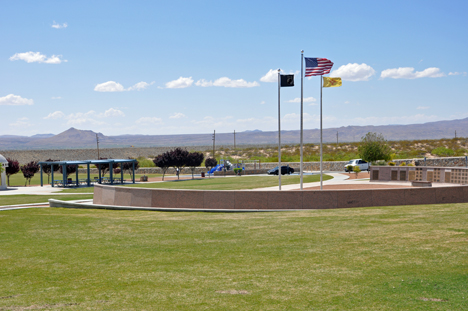
The Veterans Wall, located in the Las Cruces Veterans Park at 2651
Roadrunner Parkway, was dedicated on
|
|
 |
|
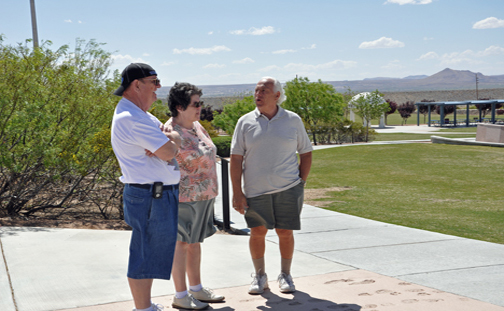 |
Lee Duquette and his friends, Jerry and Carole Gerig, who live in Las Cruces and were kind enough to act as travel guides for the two RV Gypsies. Jerry and Karen used to line dance together in Florida. |
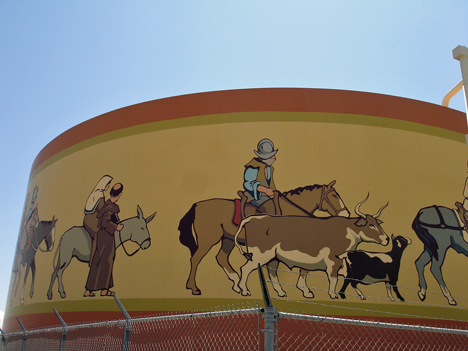
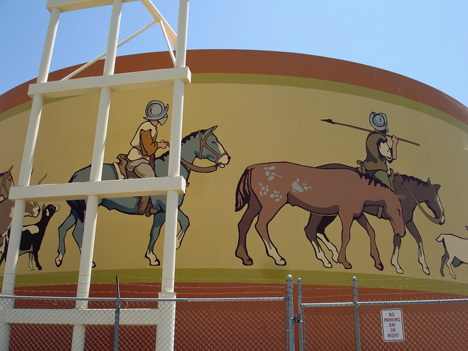
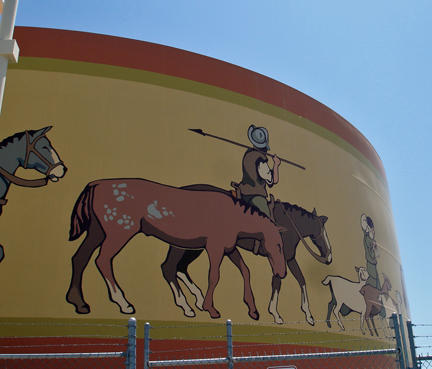
Below: The Las Cruces Water Tank; The Conquistadors are represented as one of the First travelers up the Rio Grande from Spain, but the Native Americans were already here. |
|
 |
 |
 |
|
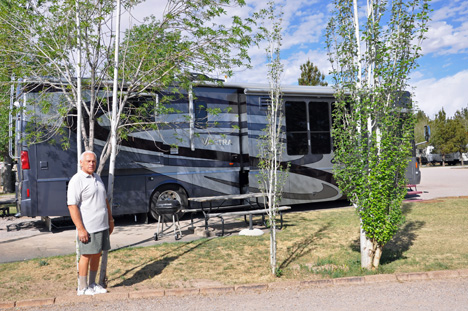 |
Lee Duquette and AWO -
|
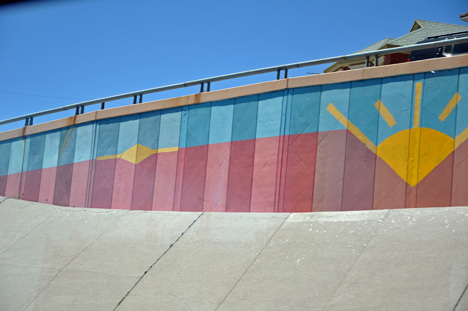
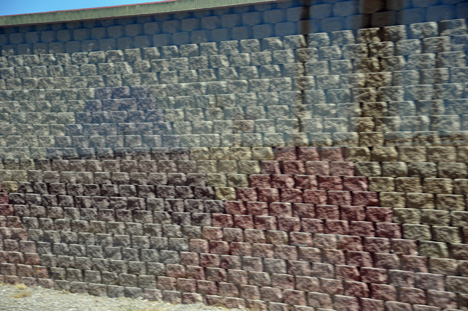
Below: Beautifully painted bridges |
|
 |
 |
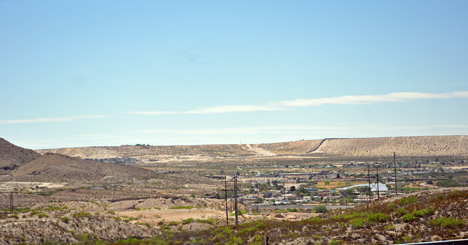
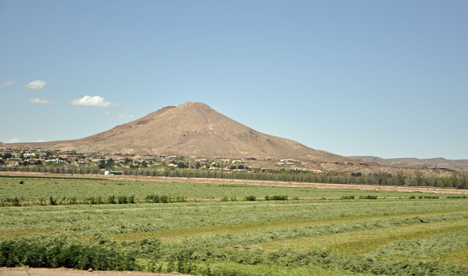
Below: Beautiful scenery |
|
 |
 |
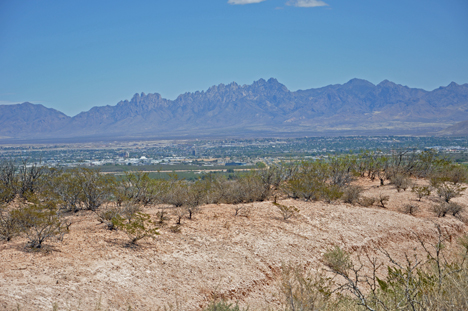
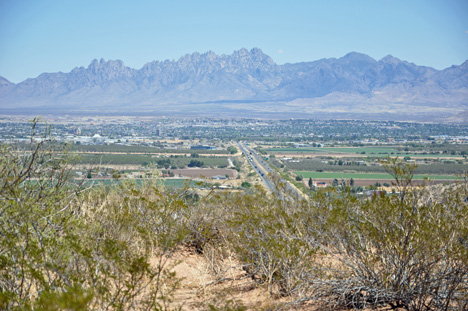
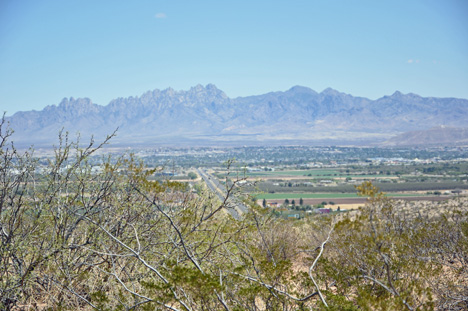
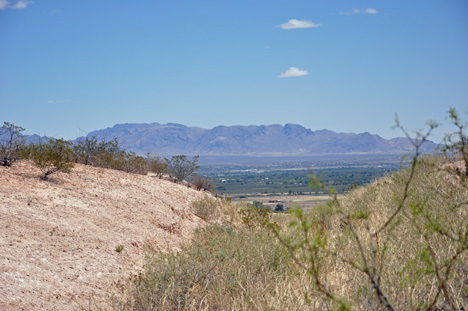
Below: The beautiful Organ Mountains are located east of Las Cruces, New Mexico. They were named by Spanish explorers who felt that the jagged peaks looked like the pipes of a pipe organ. |
|
 |
 |
 |
 |
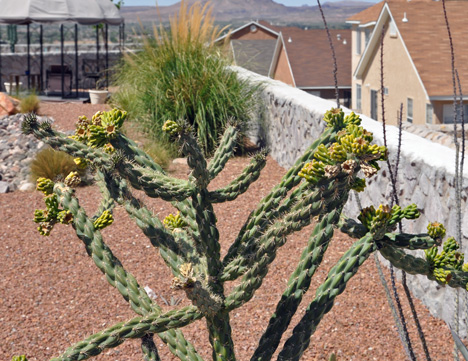
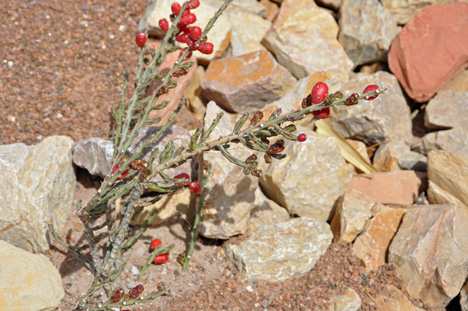
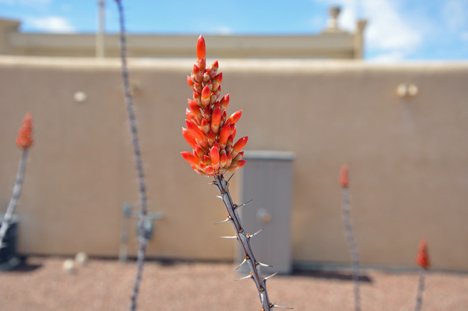
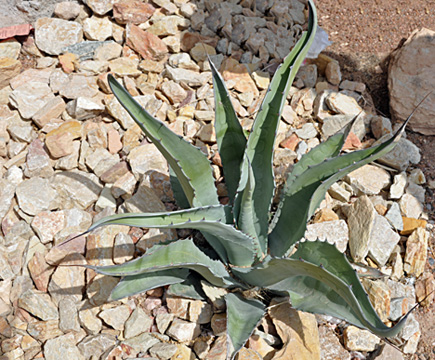
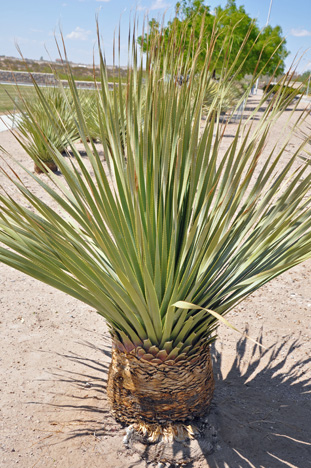
Below: Plants and Cacti in Jerry Gerig's yard |
|
 |
 |
 |
 |
 |
 |
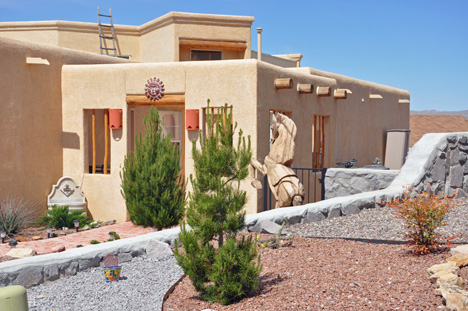
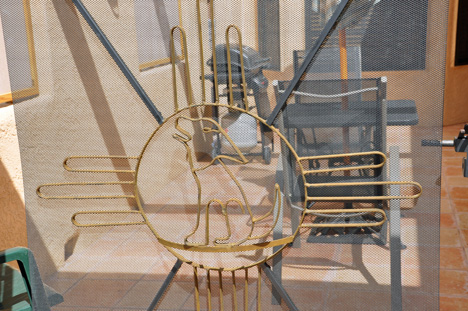
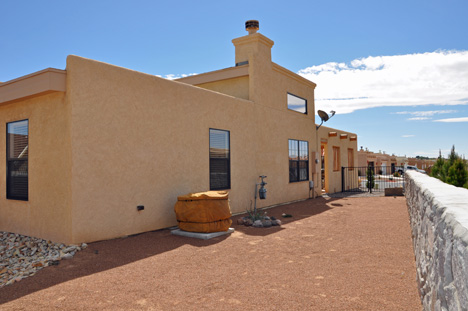
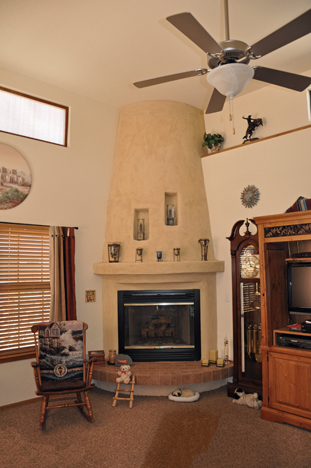
Below: The style of many houses and yards in Las Cruces |
|
 |
 |
 |
 |
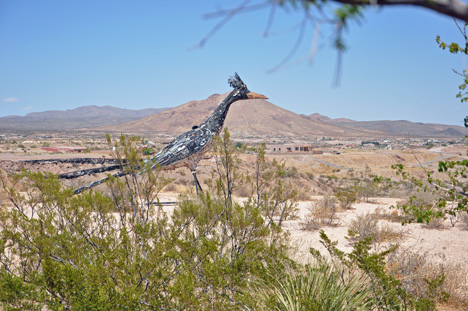
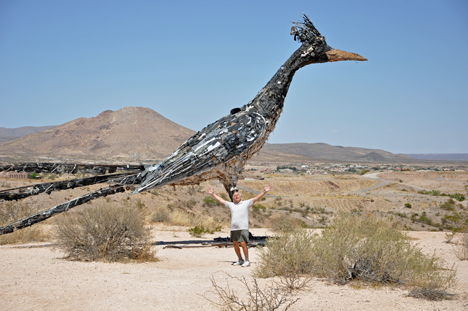
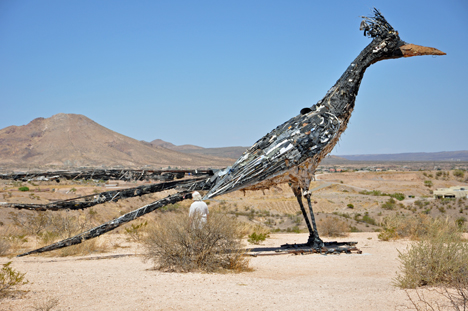
Below: The Las Cruces' giant roadrunner sculpture celebrated its fifth anniversary along I-10. But the only "Beep! Beep!" the two RV Gypsies heard was from an occasional passing car. |
|
 |
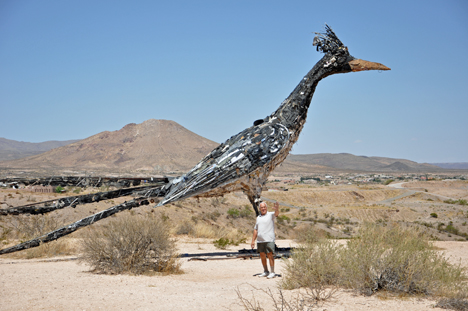 |
Below: Lee Duquette and the giant road runner. This big bird is twenty (20) feet tall and forty (40) feet long, and is the World's Largest roadrunner at this time. There is a link to the world's second largest roadrunner at the bottom of this page. |
|
 |
 |
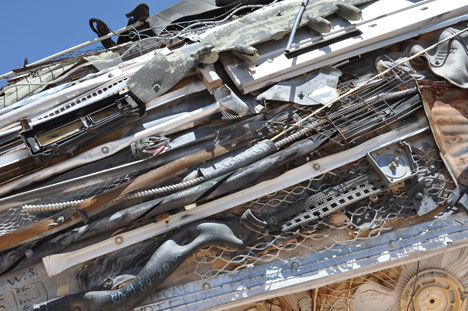
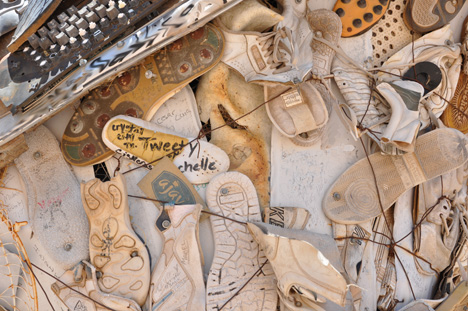
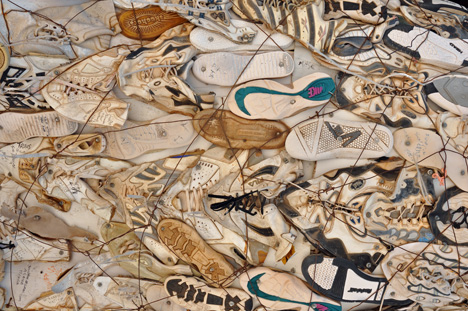
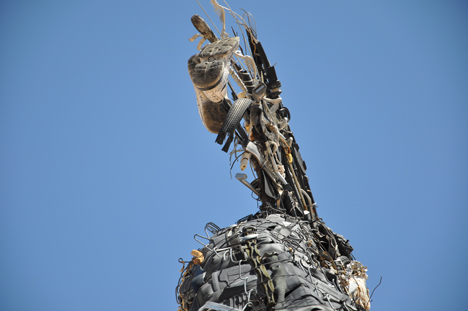
Below: As shown below, the giant roadrunner is made with all kinds of stuff; tennis shoes, old computer keyboards, bicycle tires, broken hair dryers, plastic plates, paint brushes, and lots of trash. The body of the bird is composed of wire fencing and sturdy material found at the city's sanitary landfill, which was its original nesting area after its creation in 1992. Much like the plight of its flesh-and-feathers counterpart, however, the roadrunner's habitat, in fact its very life, was threatened by progress. The city closed the landfill area on the east mesa to allow housing to be developed. The big bird now sits off I-10 on the outskirts of Las Cruces. |
|
 |
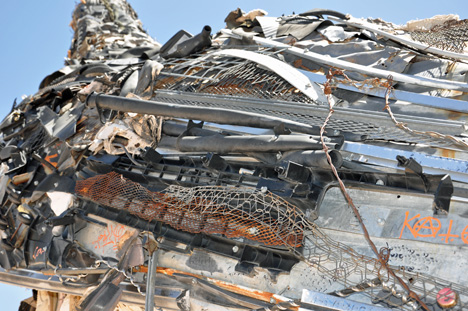 |
ABOVE and BELOW: Close-up photos of the stuff the big road runner is made of |
|
 |
 |
 |
 |
Note: In 2022, Lee and Karen Duquette went to see Paisano Pete in Fort Stockton, Texas - The second largest roadrunner in the world. It stands Eleven-feet tall and 22-feet long. You can see that bird by clicking here, but be sure to return to this page to continue the New Mexico travels. There is a link in the middle of that page that can bring you back here. |
|
Lee and Karen Duquette also visited Las Cruces NM in 2012 and 2015. If you visit either of these pages, there will be a link back here. Each visit was different, and each of the three years link to the other two years at the bottom of the page. |
|
 |
|
| Thank
you for viewing the photos of the two RV Gypsies in Las Cruces. Please
continue to explore the other photo sections in the menu below. |
|
|
Las
Cruces, NM (this page) |
|
|
|
 AFTER
you have viewed all 4 of
the above photo sections, please continue on for
photos in Arizona. AFTER
you have viewed all 4 of
the above photo sections, please continue on for
photos in Arizona. |
|
OR Continue navigation of this very large website via the buttons below. |
 |
      |
      |
      |
      |
OR - - Click here for maps and descriptions of travel BY YEAR |
 Las
Cruces was previously inhabited by the Manso people, and the Mescalero
Apache lived nearby. The area was colonized by Juan de Oñate in
1598, and he became its first governor. Las Cruces was founded in 1849
when the US Army laid out the new town after the Treaty of Guadalupe Hidalgo
had ceded the land to the United States in 1848.
Las
Cruces was previously inhabited by the Manso people, and the Mescalero
Apache lived nearby. The area was colonized by Juan de Oñate in
1598, and he became its first governor. Las Cruces was founded in 1849
when the US Army laid out the new town after the Treaty of Guadalupe Hidalgo
had ceded the land to the United States in 1848.