Two RV Gypsies: Full-Time RVers
(and Professional Travelers)
RV - AWO eyes of the two RV Gypsies
den sign for the two RV gypsies return to the home page of the two RV Gypsies
how Karen & Lee Duquette became two RV Gypsies
e-mail the two RV Gypsies
please sign the guestbook of the two RV Gypsies
go to webpage built by Karen plus other RV pages
go to the page that will explain the different photo buttons on this website
helpful information for RVers
find out what's new on this website
learn about Brian Lee Duquette
 
photos/history of continental USA by the two RV Gypsies
photos/history in Canada from the two RV Gypsies photos/history Alaska from the two RV Gypsies
Yosemite National Park facts
and photos
clipart - history bookYosemite National Park is located in the eastern portions of Tuolumne, Mariposa and Madera counties in east central California, United States. The park covers an area of 761,266 acres or 1,189 square miles and reaches across the western slopes of the Sierra Nevada mountain chain. Designated a World Heritage Site in 1984, Yosemite is internationally recognized for its spectacular granite cliffs, waterfalls, clear streams, Giant Sequoia groves, and biological diversity. Almost 95% of the park is designated wilderness.

Yosemite is one of the largest and least fragmented habitat blocks in the Sierra Nevada, and the park supports a diversity of plants and animals. The park has an elevation range from 2,000 to 13,114 feet and contains five major vegetation zones: chaparral/oak woodland, lower montane, upper montane, subalpine, and alpine. Of California's 7,000 plant species, about 50% occur in the Sierra Nevada and more than 20% within Yosemite. There is suitable habitat or documentation for more than 160 rare plants in the park, with rare local geologic formations and unique soils characterizing the restricted ranges many of these plants occupy.

The geology of the Yosemite area is characterized by granite rocks and remnants of older rock. About 10 million years ago, the Sierra Nevada was uplifted and then tilted to form its relatively gentle western slopes and the more dramatic eastern slopes. The uplift increased the steepness of stream and river beds, resulting in formation of deep, narrow canyons. About 1 million years ago, snow and ice accumulated, forming glaciers at the higher alpine meadows that moved down the river valleys. Ice thickness in Yosemite Valley may have reached 4,000 feet during the early glacial episode. The downslope movement of the ice masses cut and sculpted the U-shaped valley that attracts so many visitors to its scenic vistas today.
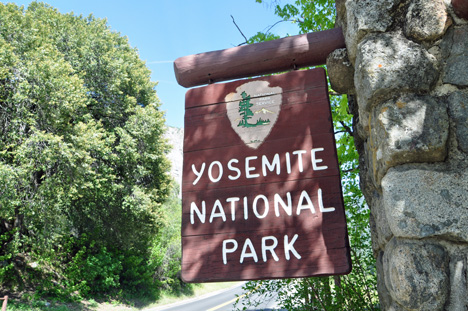
sign - Yosemite National Park
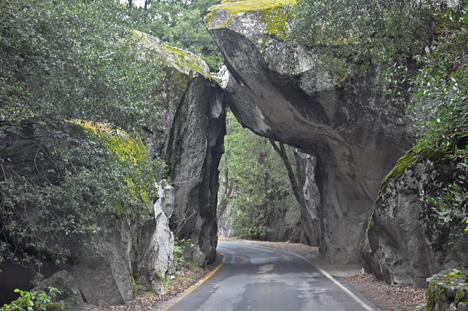
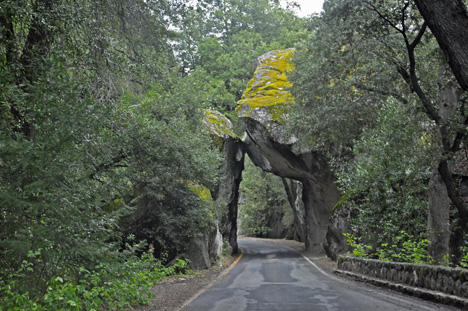
The road entering Yosemite National Park
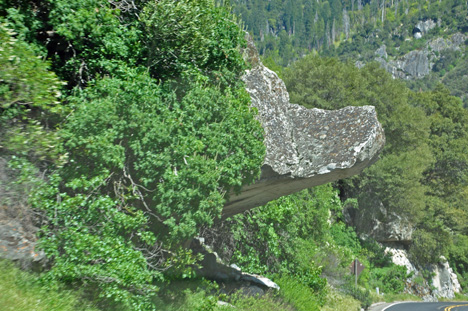
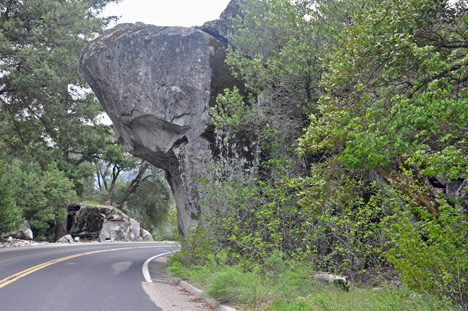
two sides of a rock formation over the road. The view on the left looks like a bear's snout.
a rock formation over the road
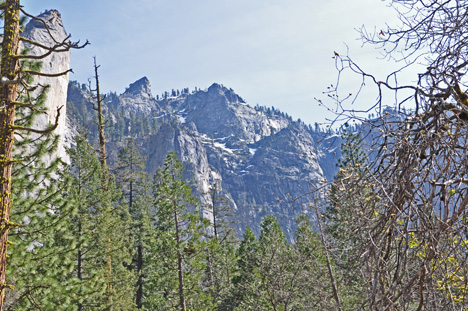
beautiful scenery within Yosemite National Park
scenery within Yosemite National Park
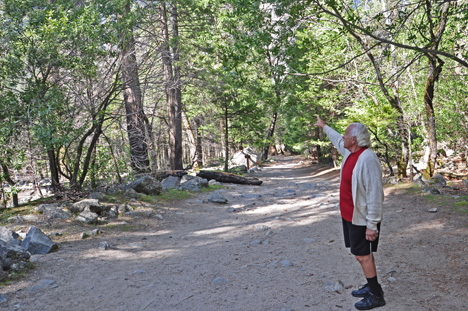
Lee Duquette admiring the scenery within Yosemite National Park
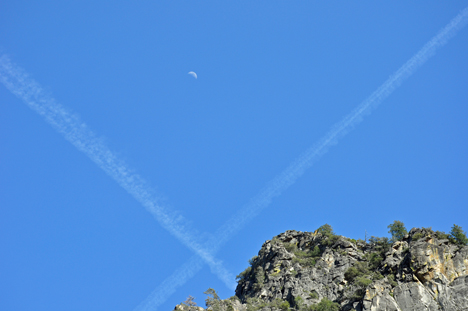
daytime photo of the moon and trails from jets
the moon and trails from jets
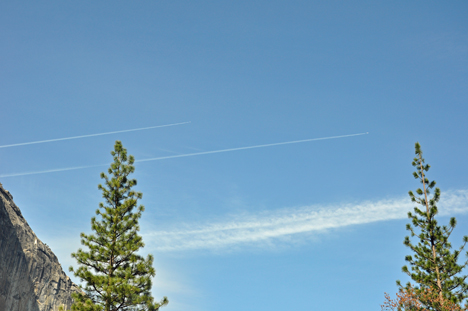
trails from jets in the sky
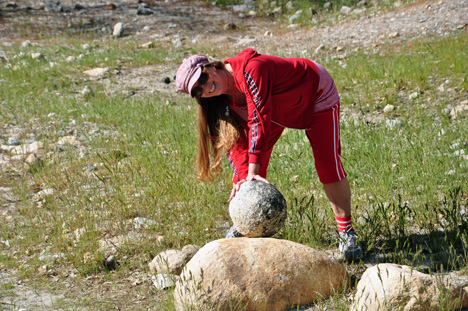
Karen checks out the small round rock that was balancing on a bigger rock and discovers that it was not attached. Surprised it stayed there and never rolled off.
Karen checks out a small round rock
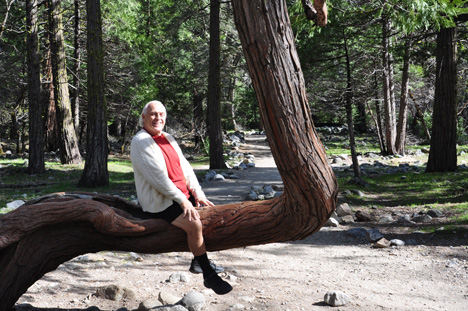
Lee thinks he is riding a horse - until he realizes that it didn't move
Lee thinks he is riding a horse
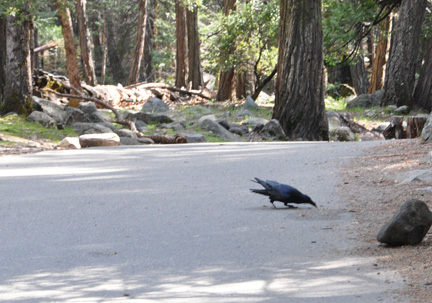
a bird
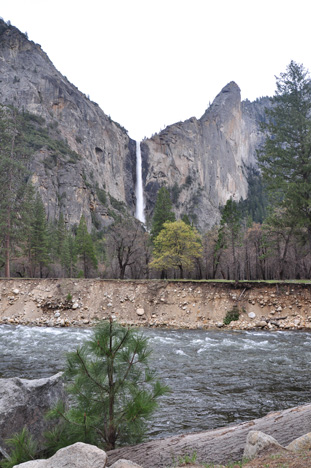
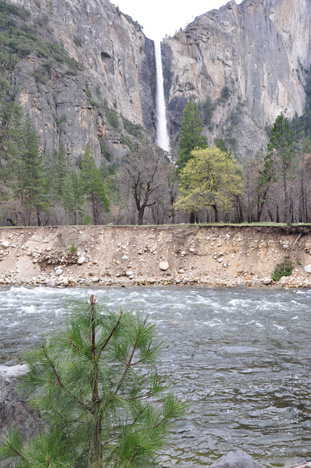
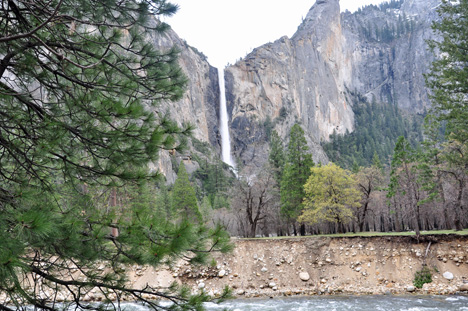
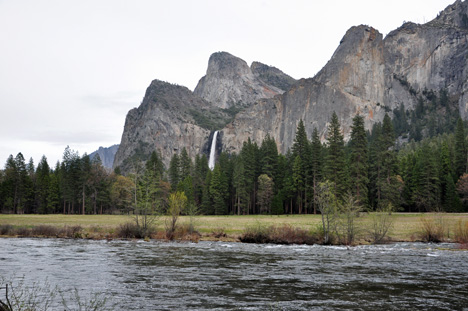
cool shots of a waterfall and the Merced River
cool shots of a waterfall and river
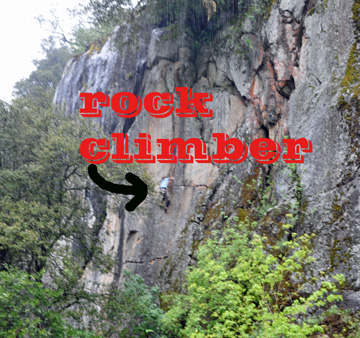
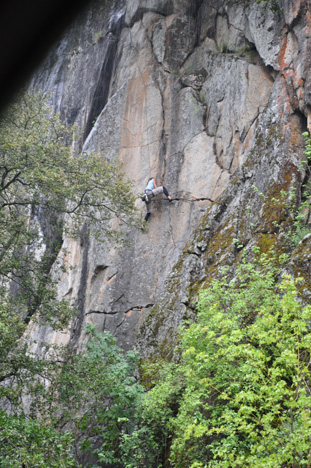
a rock climber
a rock climber
a rock climber
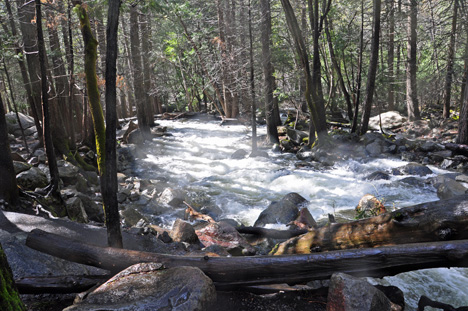
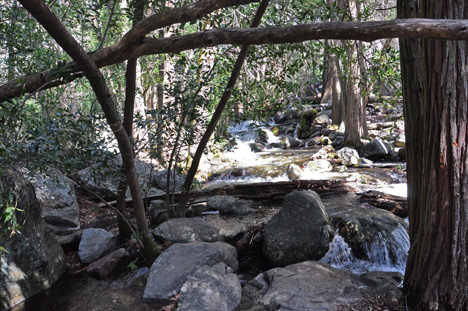
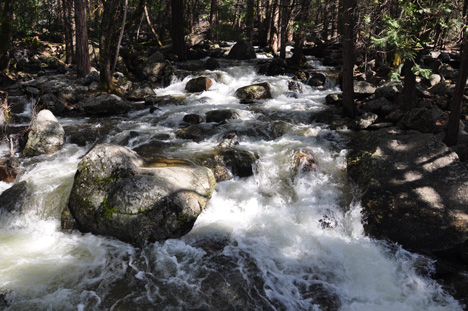
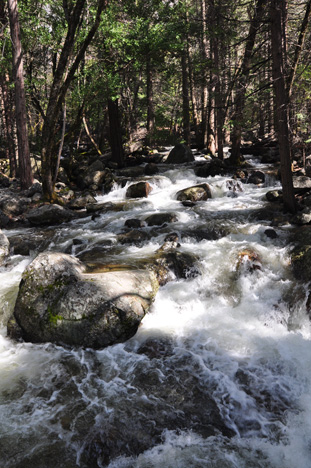
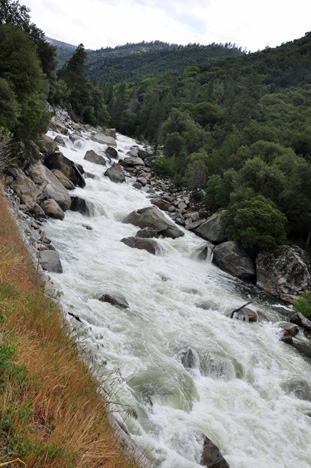
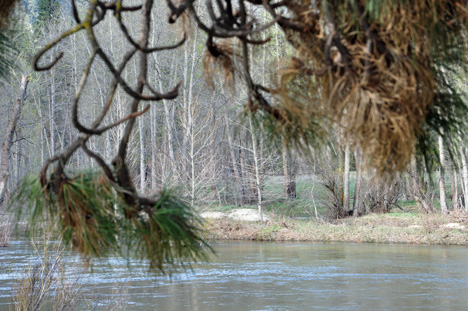
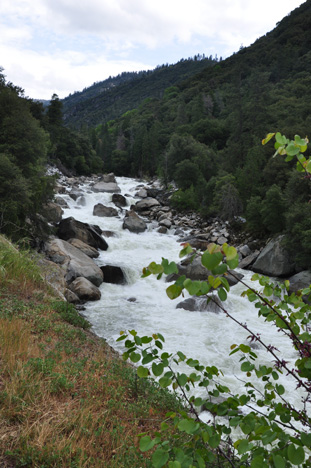
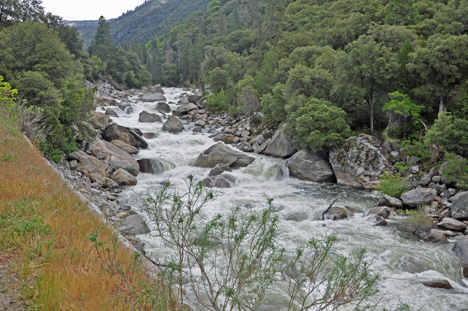
The Merced River's headwaters are in the southern half of Yosemite National Park. The river flows into Yosemite Valley. Much of the water is stored behind the New Exchequer dam in Lake McClure, and diverted by the Merced Irrigation District at the Crocker-Huffman diversion dam. The remainder of the water flows southwest through foothills, and then across the San Joaquin Valley to join the San Joaquin River.

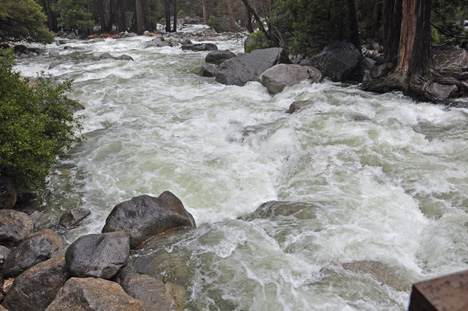
The Merced River is protected under the National Wild and Scenic Rivers Act. It is free flowing until Lake McClure and tends to flood in the winter and spring, and then reduce to a mere trickle in the late summer and fall. In April and May, the Class III-IV whitewater on the Merced is first class, the stuff of avid paddlers’ winter daydreams. For the rest of the whitewater season, the Merced churns with bold wave trains and slick chutes friendly to rafters of all levels.

Highway 140 runs along part of the Merced River and is the main road into Yosemite National Park.
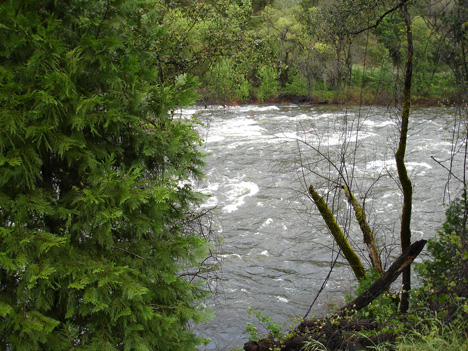
the Merced River
the Merced River
the Merced River
the Merced River
the Merced River
the Merced River

Did You Know? The Merced River was designated a National Wild and Scenic River in 1987.
Eighty-one miles of river runs through Yosemite National Park, including a stretch in Yosemite Valley.
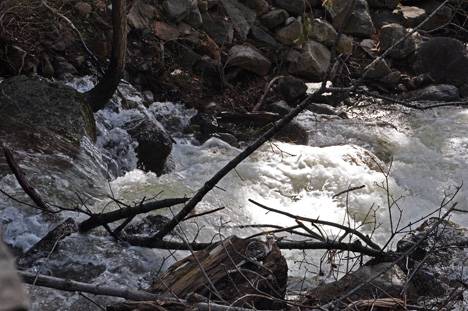
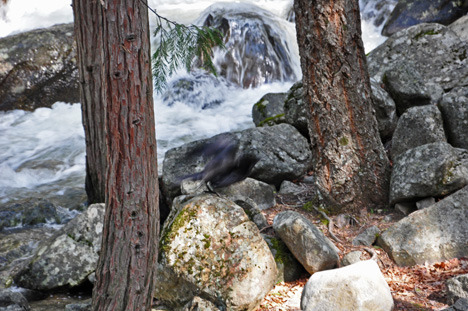
the Merced River
the Merced River
the Merced River
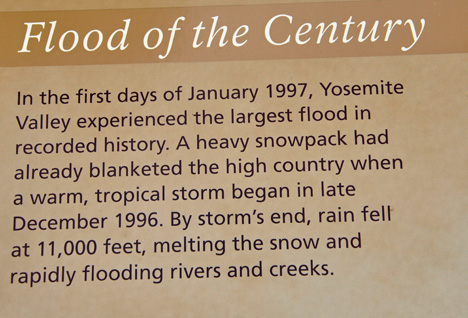
Flood of the century sign
Flood Waters undercut this road (where Karen now stands to take the below photos) and washed out a section 8 feet wide, 70 feet deep, and the length of a football field. The Merced River winds through a steep, rocky canyon between Yosemite Valley and El portal, dropping an average of 350 feet in elevation per mile. During the 1997 flood, the water rose to 30 feet above the riverbed, undercutting El Portal Road.

the Merced River
the Merced River
the Merced River
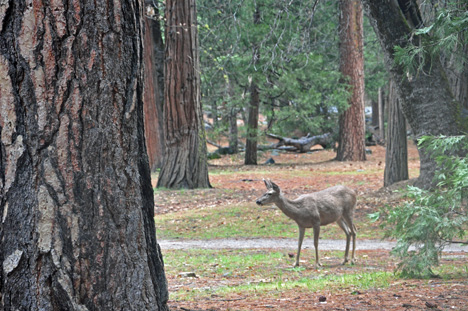
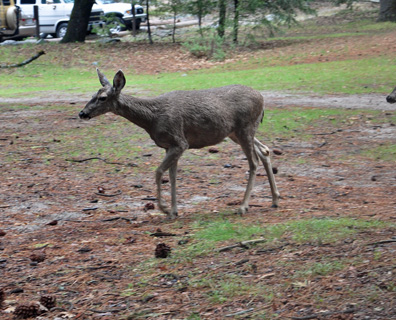
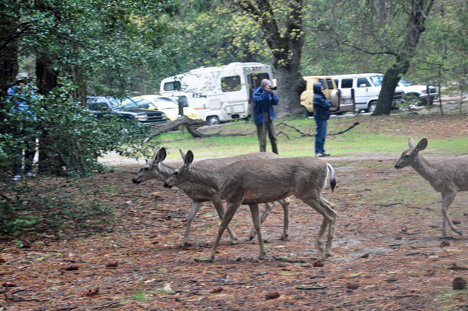
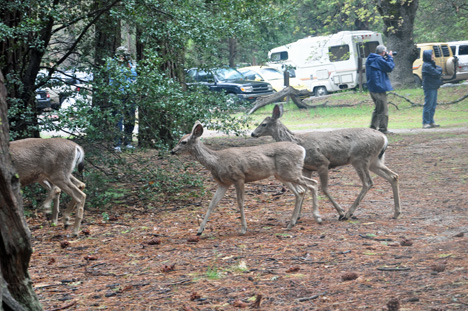
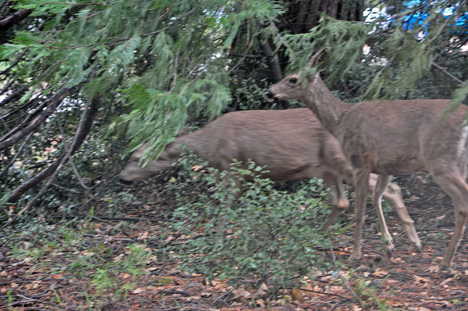
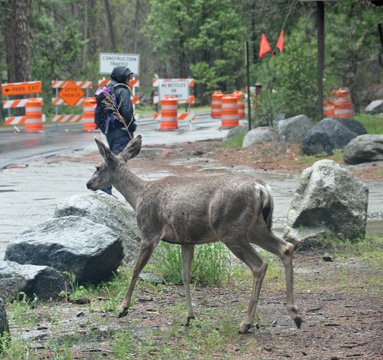
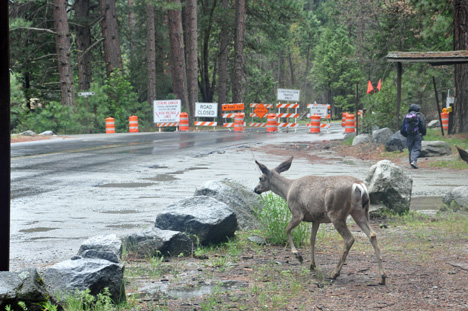
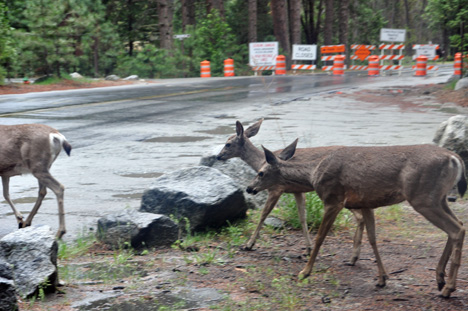
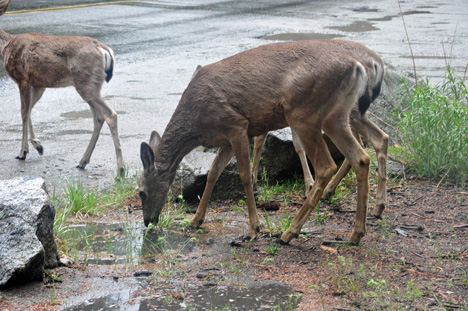
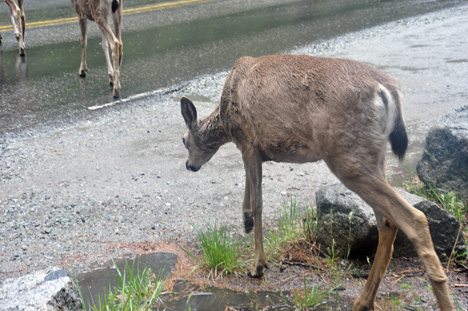
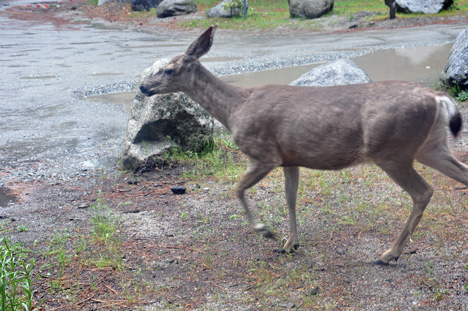
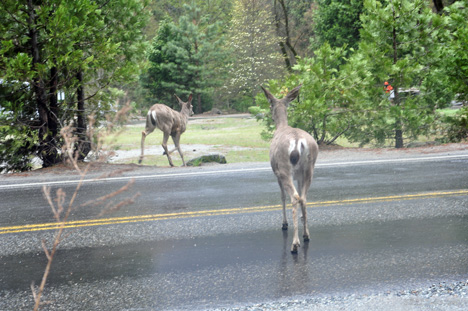
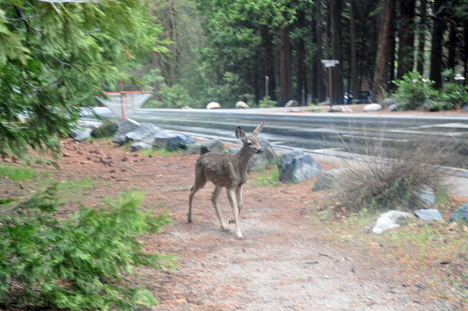
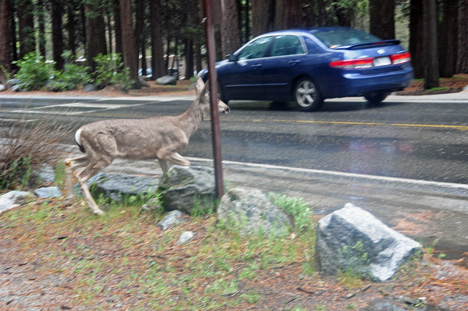
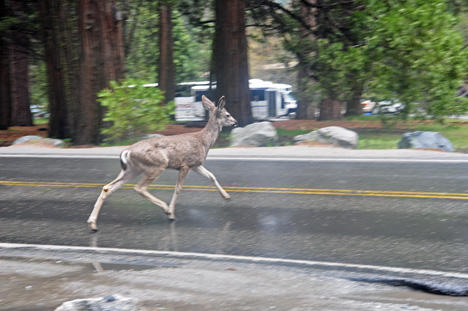
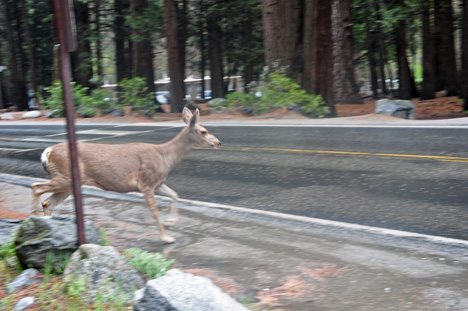
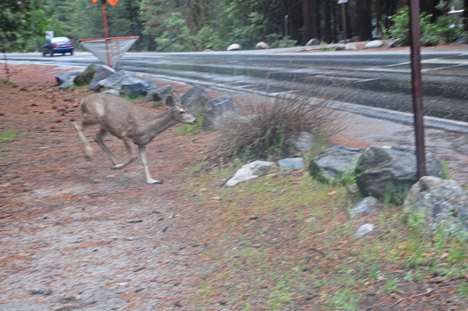
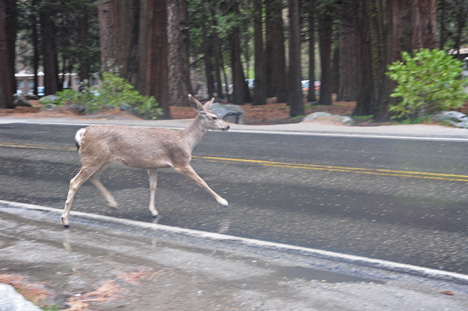
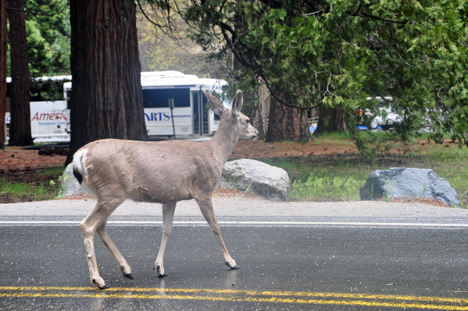
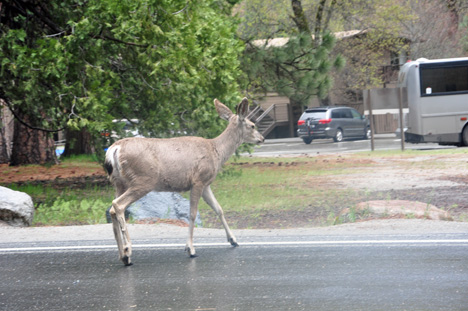
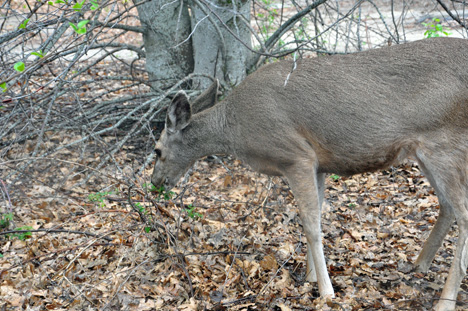
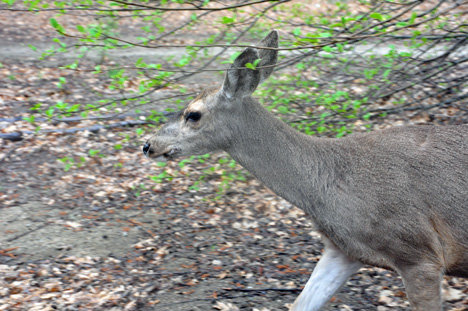
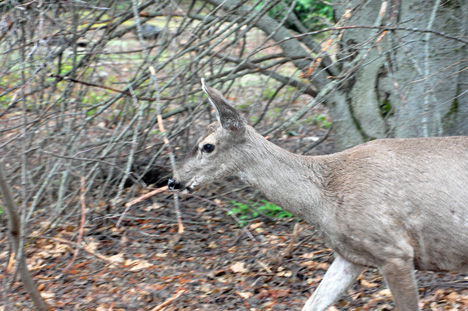
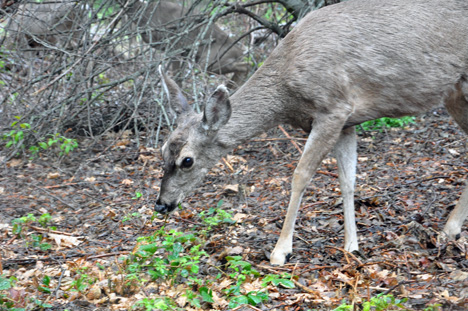
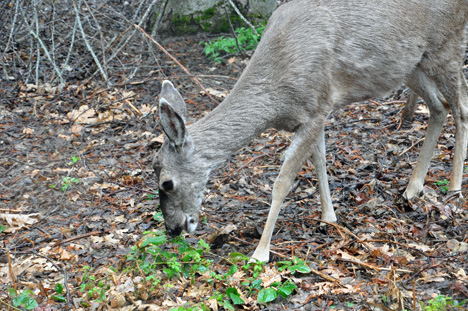
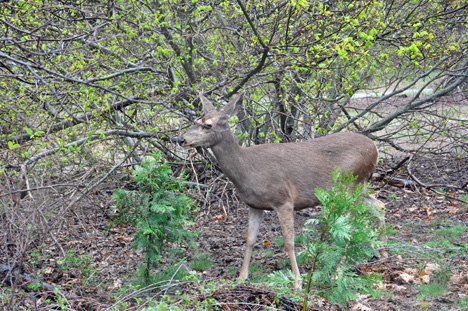
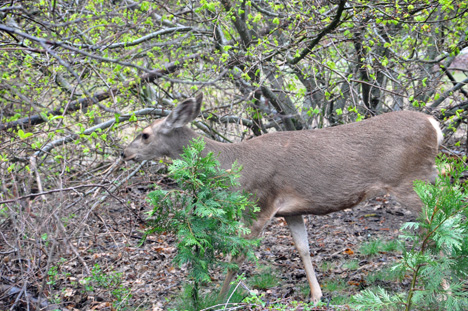
Deer in Yosemite National Park wanted to cross the road, and in doing so, several of them almost ran right into Karen as she was photographing them. The following photos of the deer were taken with a regular length lens, not a telephoto lens.Then Karen followed the deer across the street, through a parking lot, to a field where they stopped to eat the grass where she got some real close up photos while Lee filmed the deer with the video camera.
deer
deer
deer
deer
deer
deer
deer
deer
deer drinking water
deer
deer running
deer crossing road
deer
deer
deer
deer
deer
deer
deer
deer
deer eating grass
deer
deer
deer eating grass
deer
deer
deer
Now that you have viewed Yosemite Nat'l Park, please continue on to one of the other 3 sections below
(menus help the photos load faster - in case you have a slower computer)
 
Getting to the Campground
Yosemite Nat'l Park
Bridalveil Fall
El Capitan
AFTER you have viewed all 4 photo sections above, please continue on
to San Francisco, California