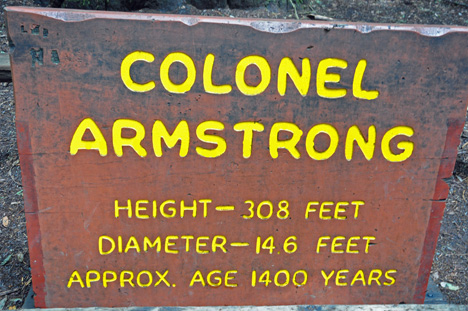
| During the 1870's this area was set aside as
a natural park by Colonel James B. Armstrong, an early-day lumberman who
recognized the beauty and natural value of the forests. Rainfall here averages
55" per year. |
|
|
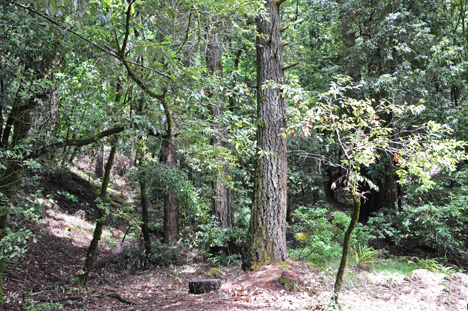
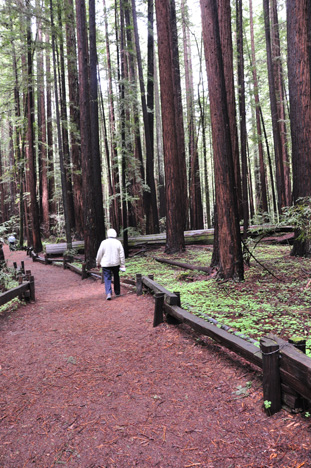
| Located in the Russian River Region 75 miles
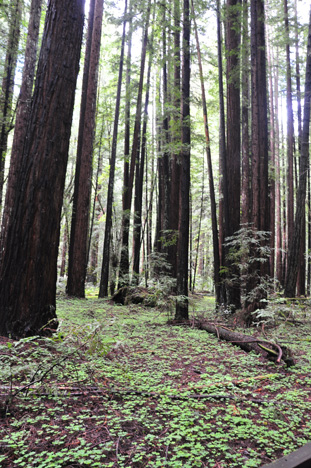
north of San Francisco, this 805 acre park features a magnificent grove
of ancient redwoods. Here you will see some of the oldest and tallest trees
remaining in this part of California. |
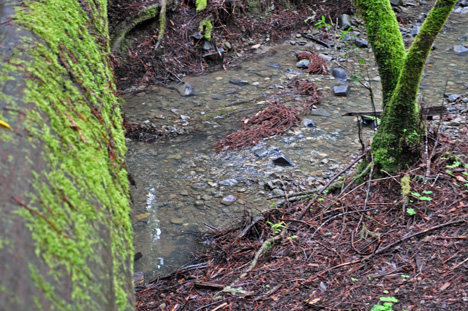
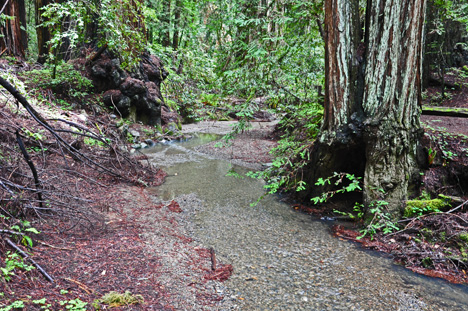
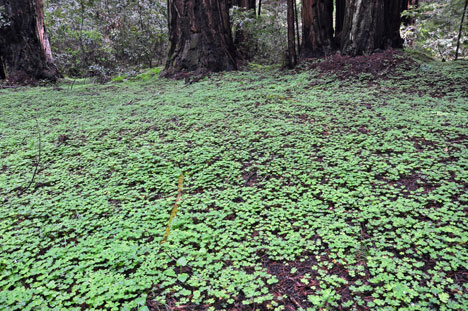
Below: The view
from the picnic site of the two RV Gypsies |
|
|
|
|
|
|
|
|
|
|
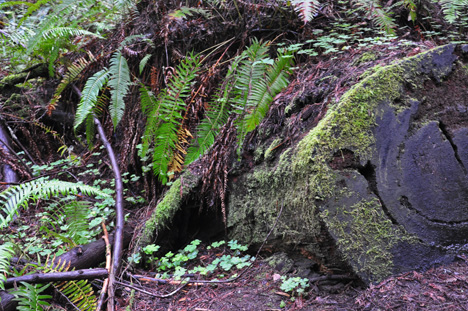
| When a tree dies and leaves a decomposing
stump, other trees sprout around it's base, sometimes creating a fairy ring
- several mature trees growing in a perfect circle. |
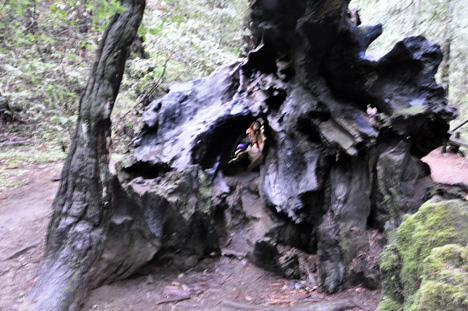
Below: Karen Duquette peeked
through the tree trunk
do you see her ?? |
|
|
|
|
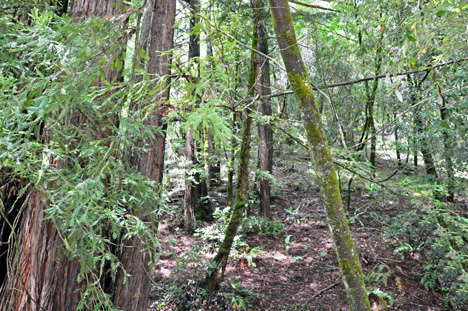
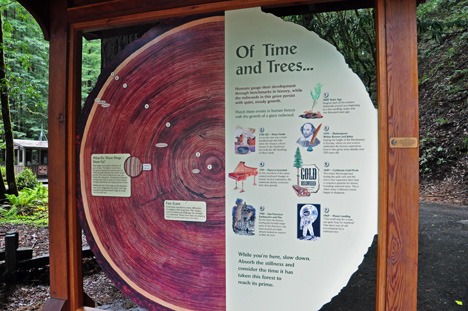
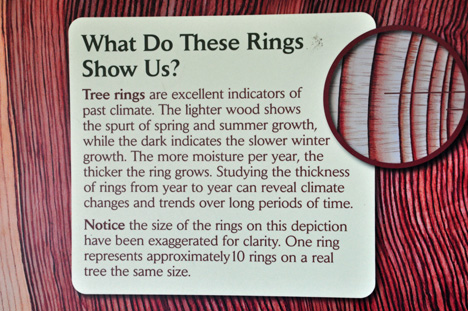
| Where the tree tops are exposed to drying winds
and full sun, redwoods grow only an inch or so per year. In partial shade
where they are protected from moisture loss, redwoods may grow two or three
feet in a year under ideal conditions. The stems of young trees may increase
in diameter by an inch or more each year, but this rate diminishes with
age. |
|
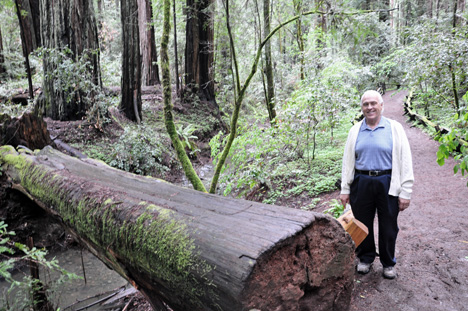
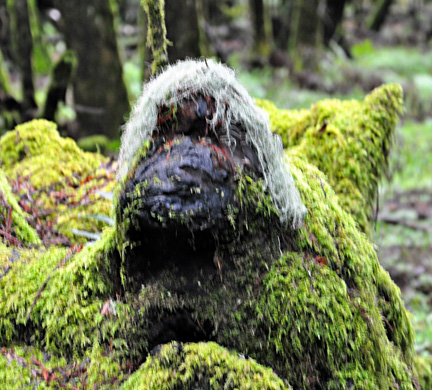
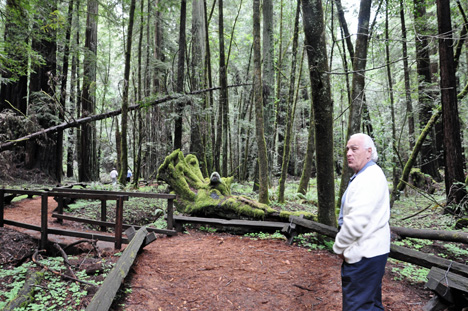
This moss covered
tree looks like a baboon ! |
No, NOT Lee! Look behind him
for the baboon-- LOL |
|
|
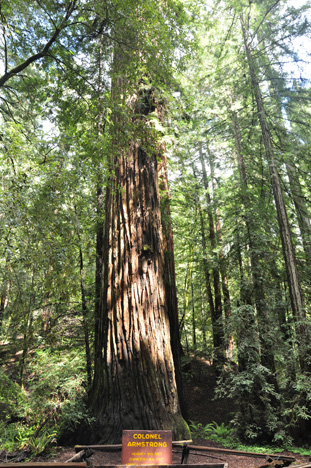
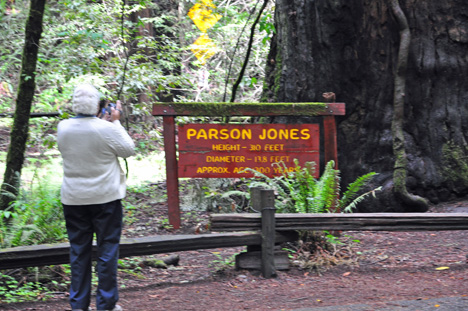
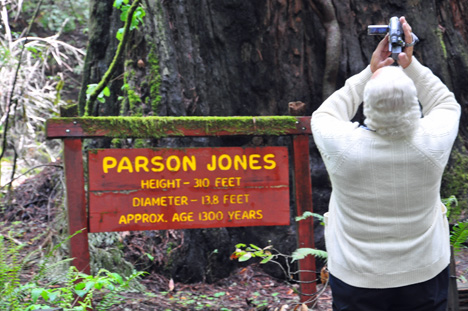
FAMOUS REDWOOD
TREES |
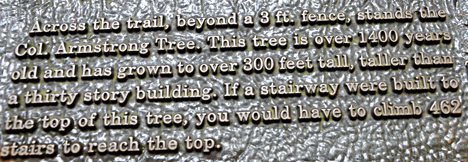
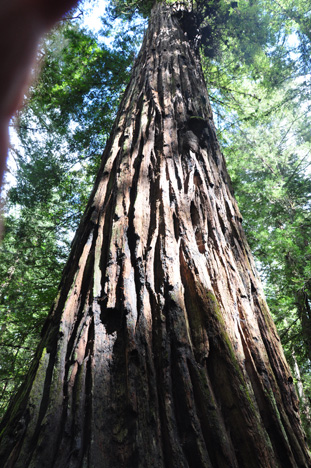
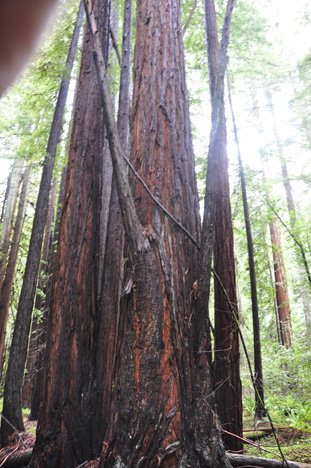
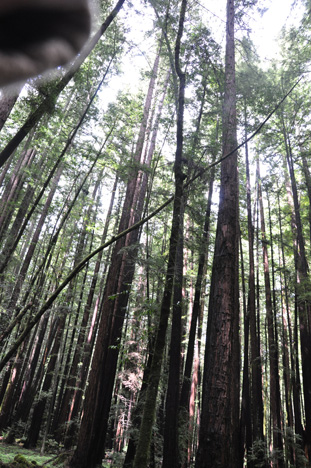
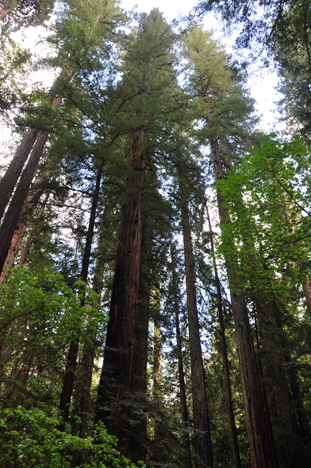
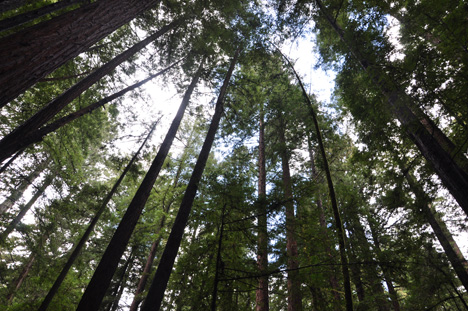
| The coast redwood is the world's tallest living
thing. The tallest redwood is 381 feet high. The coast redwood is also one
of the world's oldest living things - some survive for as long as 2,000
years. they grow naturally ONLY along a narrow coastal belt from southern
Oregon to central California where the moderate climate combines with heavy
winter rain and frequent summer fog. |
|
|
|
|
|
|
|
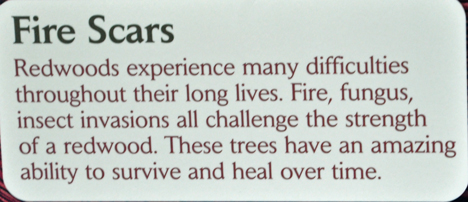
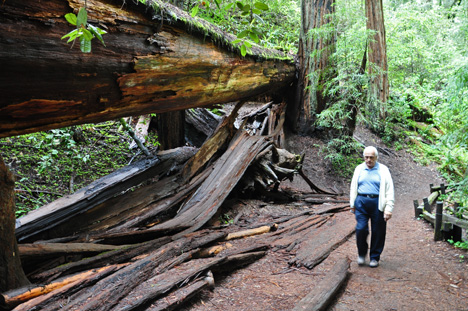
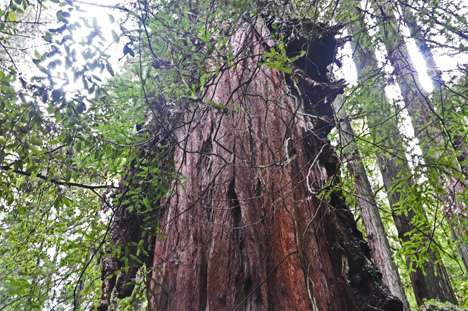
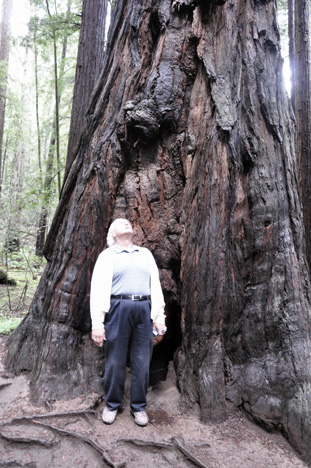
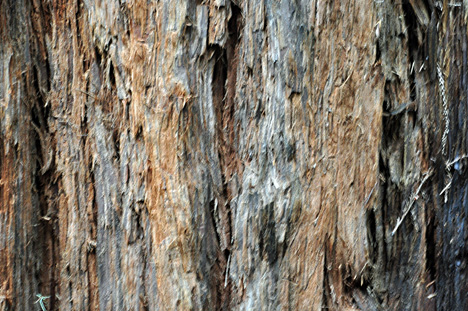
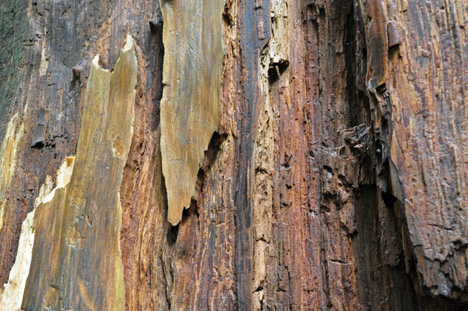
| Some trees look burned out on the inside -
these are called goosepens (the early settlers kept their geese in them).
When fire seeps through the forest, the duff and slash around the bases
of the trees burns hotter and longer, thereby finding a week spot in the
trunk and burning out the heartwood. The bark itself has tannins which insulates
the redwood, especially further up the tree. |
|
|
|
|
|
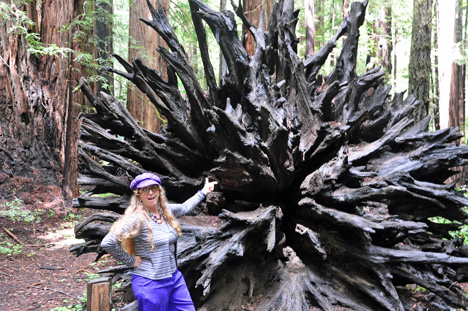
More big redwood trees |
|
|
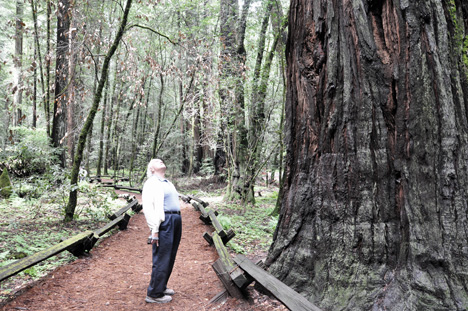
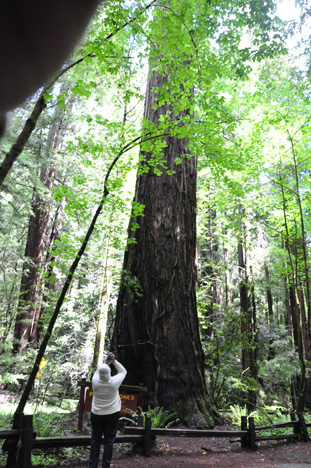
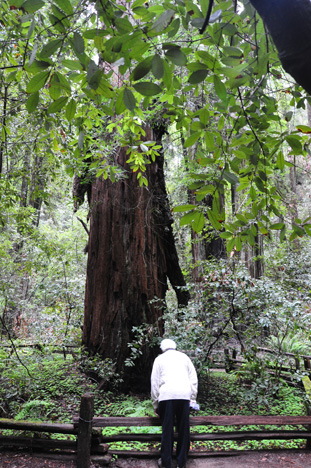
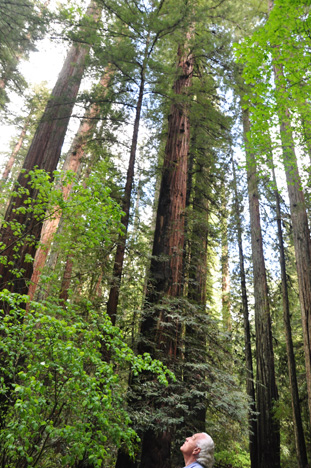
Below: Lee Duquette
really had to bend his neck backwards to see the big Redwood tree. |
|
|
|
|
|
|
|
|
|
|
|
|
|
|
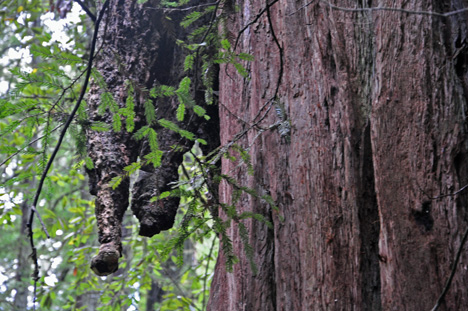
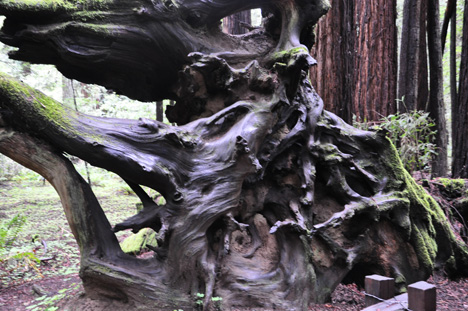
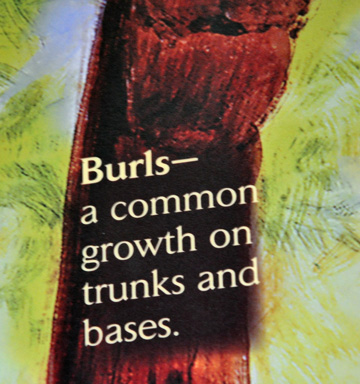
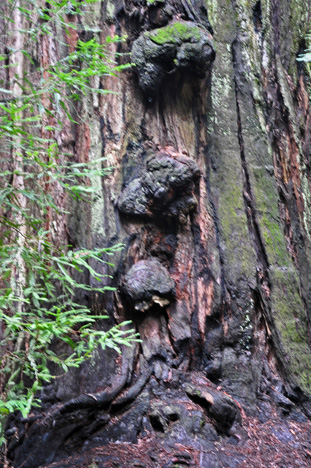
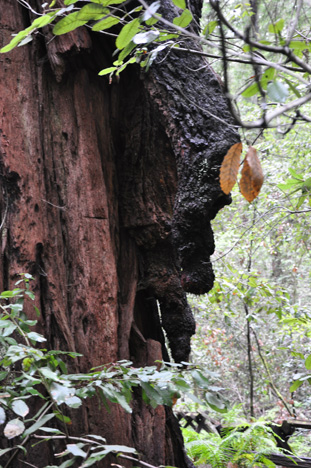
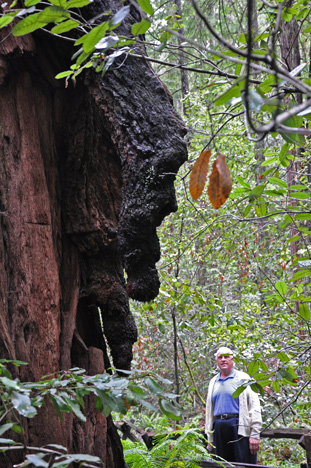
| Below; The knobby growths or burls on the sides
of trees are places where the tree has budded over and over again in the
same location. They are not harmful to the tree. The growth on the tree
below looks like a side profile of a face. |
|
|
|
|
|
|
|
|
|
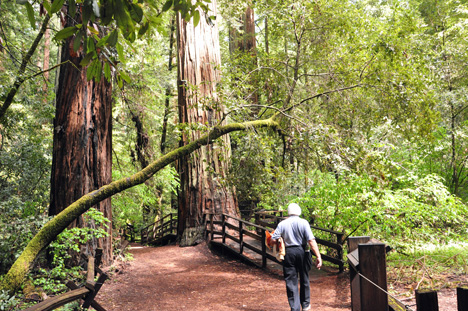
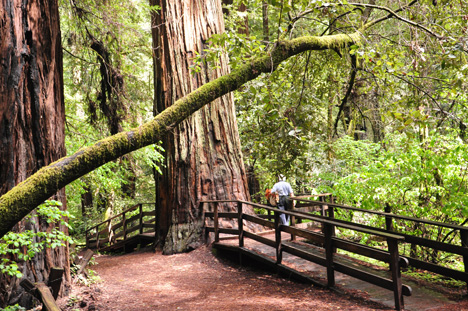
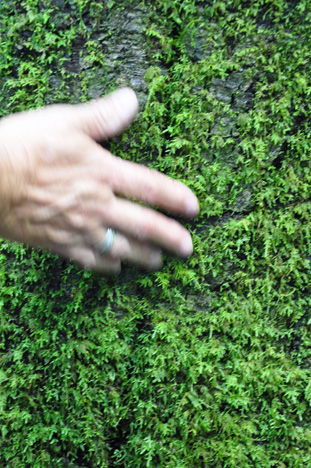
Below: Lee Duquette walked
on a bridge that encourages people to feel the moss - so he did! |
|
|
|
|
|
|
Menu for the two RV Gypsies
in California - April 2009 |
California photos are in 28 separate sections found below. Some sections may have more than one page so that the photos will upload faster.
You may visit these sections in any order you choose. Each section will have this menu so that visitors do not have to keep returning here in order to continue the California adventures. There is also a link to Oregon at the very bottom of the California menu.
|
|
|
|
|
|
|
|
|
|
|
|
|
|
|
|
|
|
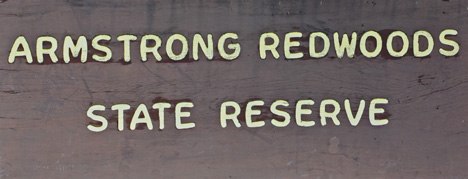
Armstrong Redwoods
State Preserve -
Giant Redwood Trees
|
|
|
|
|
|
|
|
|
|
|
|
|
|
|
|